
New in person seminar in Portland, Oregonar
Practice of Jingfang (經方 Classic Formulars):
A Systemic Approach to Shanghan Zabing Lun (傷寒雜病論) Practice
This four-module course presents a pragmatic methodology for practicing Jingfang (經方)—the classical formula system of Zhang Zhongjing’s Shanghan Zabing Lun.
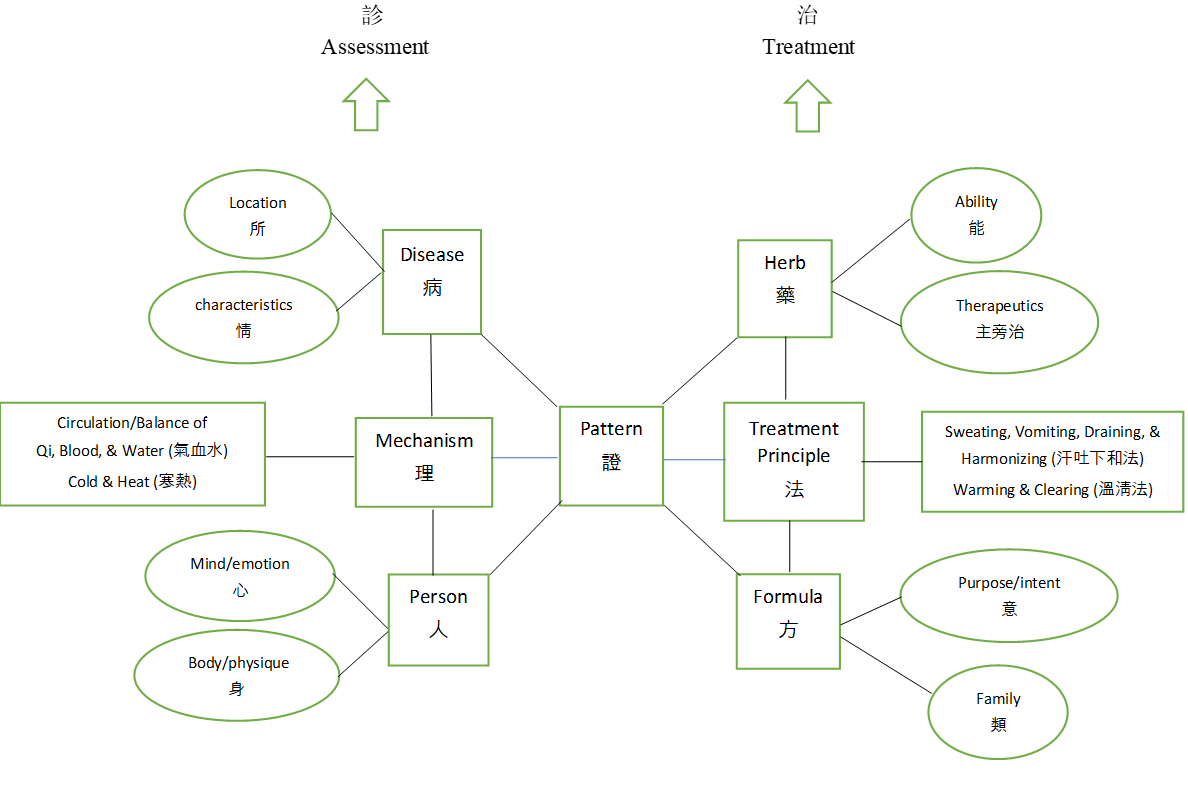
The curriculum is organized around Four foundational Pillars of Jingfang practice:
Herbs (藥), Formulas (方), Disease (病), and the Person (人).
These pillars are introduced sequentially and progressively integrated, providing students with a coherent system that supports accurate diagnosis, fluent formula selection, and a deeper understanding of the human body and disease processes.
Module 1: Herbs (藥)
Seminar dates: 9/19 (sat) - 9/20 (sun), 2026
The first module introduces the herb patterns of Zhang Zhongjing’s principal medicinal substances.
An herb’s pattern—its practical clinical indication—is derived through careful cross-analysis of the source texts. This includes examining the formulas in which the herb appears, as well as cases where it is added, removed, or used in different dosages. Through this analysis, the clinical function and pattern of the herb can be clarified.
The conclusions drawn from textual analysis must then be validated through clinical practice over time.
This methodological approach is strongly influenced by the work of the 18th-century Japanese master Yoshimasu Todo, who emphasized empirical observation and textual and clinical evidence over theoretical construct.
Understanding herb patterns provides essential clues for formula selection and for identifying the type of patient to whom a particular herb is best suited.
Highlights
Students will learn:
The history of empirical Jingfang herbal practice and the framework of a systemic approach
Yoshimasu Todo’s work on single-herb patterns
The significance of main ability, primary pattern, and inclusive pattern
The concept of constitutional herbs and formulas
Patterns of Zhang Zhongjing’s 12 primary clue herbs
Major formulas associated with the 12 primary clue herbs
Patterns of 18 secondary clue herbs
Major formulas associated with the 18 secondary herbs
How to arrive at appropriate formulas through clue herb identification
Module 2: Formulas (方)
Seminar dates: 10/17 (sat) - 10/18 (sun), 2026
The second module organizes the Jingfang pharmacopeia into a logical and clinically actionable system.
While a formula pattern consists of the signs and symptoms described in the Zhang Zhongjing’s original texts, consistent clinical application requires a deeper understanding of Formula Intent (方意) that guides its application.
One can grasp a formula intent through understanding the composition of the formula (based on module 1 knowledge) and knowing the formula within the architectural relationships of the whole formula system, in addition to its explicit patterns.
To help students grasp formula intent and develop fluency in formula selection, this module introduces two structural approaches that together reveal the complete architecture of Zhang Zhongjing’s formulas:
Vertical Loom — formula delineation
Horizontal Loom — formula families organized by principal herb
Together these perspectives allow students to see how formulas evolve, relate, and function within a coherent system.
Highlights
Students will learn:
The therapeutic purpose and intent of formulas
The structural organization of formulas through vertical and horizontal loom analysis
Yoshimasu Todo’s work on formula delineation
Extended formula delineation (vertical loom)
Formula relationships through changes in ingredients and dosage
Formula families organized by principal herbs (horizontal loom)
Formula relationships within families
Methods for combining formulas
Module 3: Disease (病)
Seminar dates: 11/14 (sat) - 11/15 (sun), 2026
The third module examines disease patterns in terms of their location, characteristics, and their effects on the circulation of Qi, Blood, and Fluids within the body.
These physiological substances are analyzed from two perspectives:
Qualitative aspect — their movement (circulation)
Quantitative aspect — their volume (capacity)
This framework allows students to understand how disruptions in circulation or volume generate pressure within the body and lead to recognizable disease patterns.
The module also provides a systematic overview of the Shanghan Zabing Lun disease framework, including:
the Six Diseases of Cold Damage (傷寒六病)
their derivative patterns (變證)
other independent diseases (雜病)
Students will learn how both environmental influences and internal factors disturb the body’s regulatory balance and produce distinct disease manifestations.
Highlights
Students will learn:
Circulation and capacity of Qi, Blood, and Fluids in the body
Different degrees of impaired circulation
The consequential pressure created by impaired circulation
Methods of releasing pressure and restoring circulation through herbs and formulas
The systemic organization of diseases in the Shanghan Zabing Lun
The six disease patterns of Shanghan in terms of location and characteristics
Patterns of derivative and independent diseases
Module 4: The Person (人)
Seminar dates: 12/12 (sat) - 12/13 (sun), 2026
The fourth module focuses on the person as the central subject of diagnosis and treatment, integrating the knowledge developed in the previous three modules.
At this stage, students will understand how herbs, formulas, and disease processes interact with a patient’s constitutional characteristics.
Building on this foundation, the module introduces practical diagnostic and clinical evaluation methods that enable practitioners to synthesize these elements effectively in real clinical settings.
Through the integration of the four pillars—herbs, formulas, diseases, and the person—students develop a coherent practical diagnostic and treatment method (法) and understanding of mechanism (理) in Jingfang practice. With this foundation, practitioners can continue refining their clinical skills and deepen their mastery of classical medicine.
Highlights
Students will learn:
A new integrative diagnostic approach
Constitutional aspects of the human body in relation to herbs and formulas
Evaluation of constitution through eight parameters
Mechanism of Qi, Blood and Fluids dynamic
Assessment of Qi, Blood, and Fluids circulation
Palpation and diagnostic methods of five trunk regions
Methods for synthesizing the four modules and applying them clinically
Instructor: Joon Hee Lee, DAOM, LAc
Joon Hee Lee brings 25 years of dedicated Shanghan Zabing Lun (傷寒雜病論) research and clinical experience to this seminar. He has thoroughly deconstructed and analyzed Shanghan Zabing Lun patterns, formulas, and herbs to develop a seamlessly organized, intuitive framework for practical clinical application. He has also devoted himself to developing highly precise objective diagnostic methods by integrating anatomical insights and osteopathic palpatory techniques. Over the past decade, he has focused on palpating and evaluating the body in depth in clinic - including organs, blood vessels, nerves, lymphatics, fascial and membranous structures, subtle rhythms and qi pathways - to understand precise workings of the body. This seminar represents the culmination of his pursuit of a truly practical and effective Jingfang (經方) practice introduced by Zhang Zhong Jing a long time ago.
Location: Portland, Oregon
Tuition: $1,800 (48 NCBAHM PDA pending)
Special offer: Membership ($540) for free *
* All participants who pay the tuition in full will receive a permanent Wisdom Garden Academy membership upon completion of the Module 1.
Individual Module Tuition: $450 *
* Registration for an individual Module is also available.
* Each Module is a prerequisite for the subsequent Modules.
* Registration will close on 8/25.
Cancellation and refund policy
If you cancel before 8/1/2026, you will receive a 100% refund minus a $100 administration fee.
If you cancel after 8/1/2026, NO REFUND will be given.
If you have to miss one of modules, there will be no refund for that portion but you are eligible to make up the missed module without extra cost when the course is offered next time.
Wisdom Garden Academy reserves the right to cancel the scheduled course due to low enrollment or other extenuating circumstances. In case we need to cancel the seminar, a full amount will be refunded to those already registered.
Pre-study materials
Because of the vast areas to be covered, participants are encouraged to study ahead and prepare for the lecture. Pre-study materials will be provided 2-3 weeks prior to each module.